Inkless scar revision treatment overview
Inkless scar revision uses microneedling technology with a specialised serum rather than tattoo pigment. Controlled micro-channels are created through the scar tissue, breaking down the dense, disorganised collagen that makes a scar look shiny, raised or tethered, and triggering a fresh wound-healing response that lays down healthier, better-organised collagen.
Because no pigment is introduced, there is no risk of a colour mismatch as your skin tone changes with the seasons or with age — a genuine limitation of pigment-based scar camouflage. The improvement is your skin's own, so it continues to behave naturally.
The technique works on stretch marks, caesarean and surgical scars, self-harm scarring, burns, acne scarring and hypopigmented or hypertrophic scars, provided the scar is fully mature — usually at least twelve months old, and preferably eighteen.
Benefits of inkless scar revision
- Softens the texture, colour and visibility of mature scars
- No pigment, so no risk of colour mismatch over time
- Improves skin tone blending toward your natural complexion
- Reduces the shiny, tight or tethered appearance of scar tissue
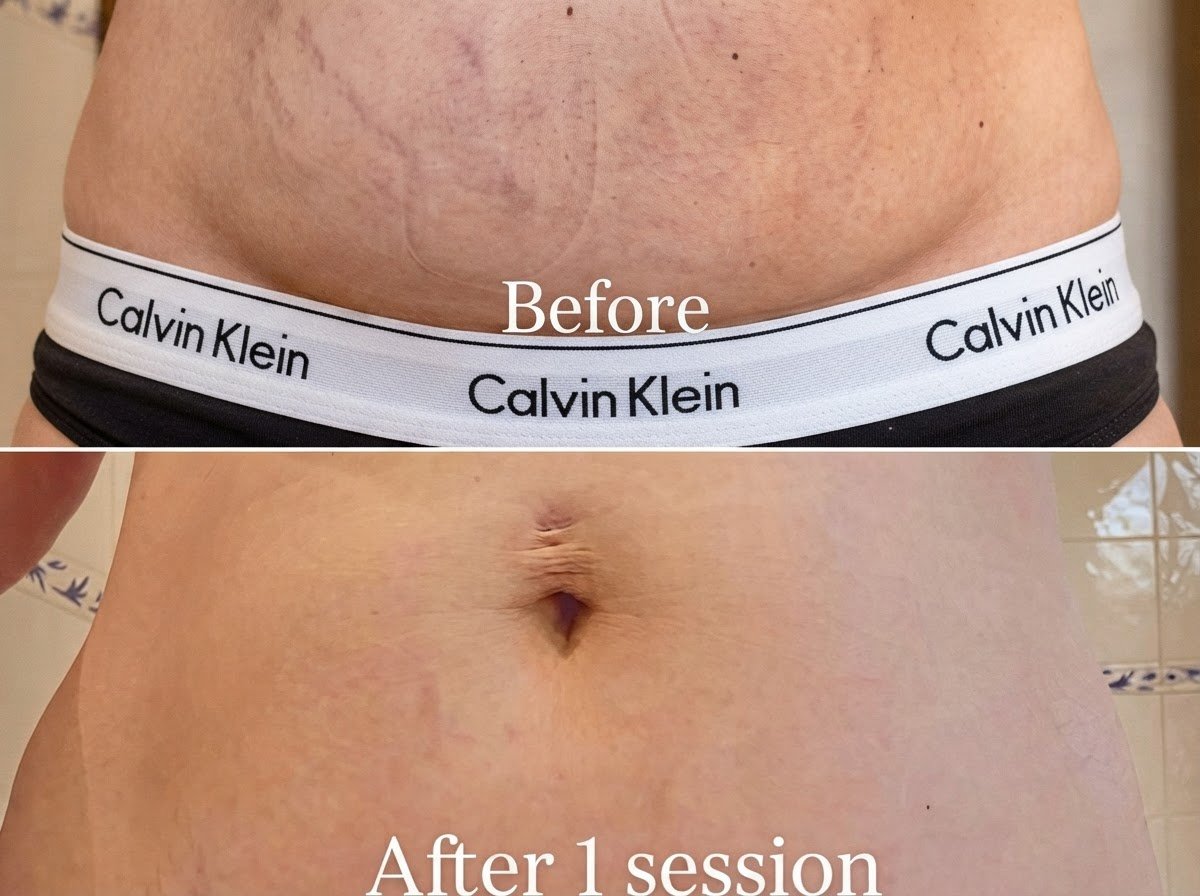
- Effective on stretch marks that no cream has touched
- Improvement is permanent, not maintained cosmetically
- Non-surgical, with modest and predictable downtime
- Handled with genuine discretion and sensitivity
Who is inkless scar revision suitable for?
Suitable candidates have mature scars at least twelve to eighteen months old with no active healing, infection or open tissue. Stretch marks on the abdomen, thighs, hips and breasts respond well, as do caesarean scars, appendectomy and laparoscopy scars, self-harm scarring and many acne scars.
Realistic expectation is essential and we are direct about it: this treatment improves scars, it does not erase them. Most clients achieve a meaningful reduction in visibility across a course of three to five sessions, enough that the scar stops drawing the eye. Anyone promising complete removal is not being straight with you.
Inkless scar revision is not suitable for those with a keloid scarring tendency, active skin infection, uncontrolled diabetes, current cancer treatment, during pregnancy or breastfeeding, or within six to twelve months of Roaccutane. Clients on blood thinners need GP approval.
Your consultation process
This consultation is deliberately private and unhurried. Many clients have carried a scar for years and have never discussed it openly, so there is no rush and no clinical detachment about it.
Sophia examines the scar for age, depth, colour, pliability and texture, and photographs it with consent for objective comparison later. She will explain how many sessions your particular scar is likely to need, what degree of improvement is realistic, and what the healing period will involve.
A patch test on a small section is often recommended, both for safety and so you can see how your skin responds before committing to a full course.
The treatment procedure step by step
Appointments last 60 to 90 minutes depending on the size of the area. Topical anaesthetic is applied for 20 to 30 minutes so the treatment is comfortable; sensation is usually described as a scratching or vibration rather than pain.
The area is cleansed and prepared, then worked systematically with a sterile single-use needle cartridge at a depth matched to the scar. Sophia works across and through the scar tissue in multiple directions to break down fibrous bands, applying the inkless serum throughout so it reaches the newly created channels.
Pinpoint bleeding and redness are expected and are part of the healing response being triggered. The area is then soothed, dressed where appropriate, and you leave with written aftercare and your next appointment booked six to eight weeks later, since collagen remodelling needs that time.
Healing and recovery timeline
Days one to two: the area is red, warm and may feel like sunburn, with mild swelling. Days three to five: redness fades and fine flaking or slight roughness appears as the surface renews. Days five to seven: skin closes and looks normal, though the scar may temporarily appear more prominent before it improves.
Weeks two to eight: this is where the real change happens invisibly, as new collagen is laid down and remodelled. Improvement continues for up to three months after each session, which is why appointments are spaced generously rather than crammed together.
Keep the area clean and dry for 48 hours, avoid swimming and saunas for two weeks, and protect it from sun with SPF 50 for at least three months.
Expected results
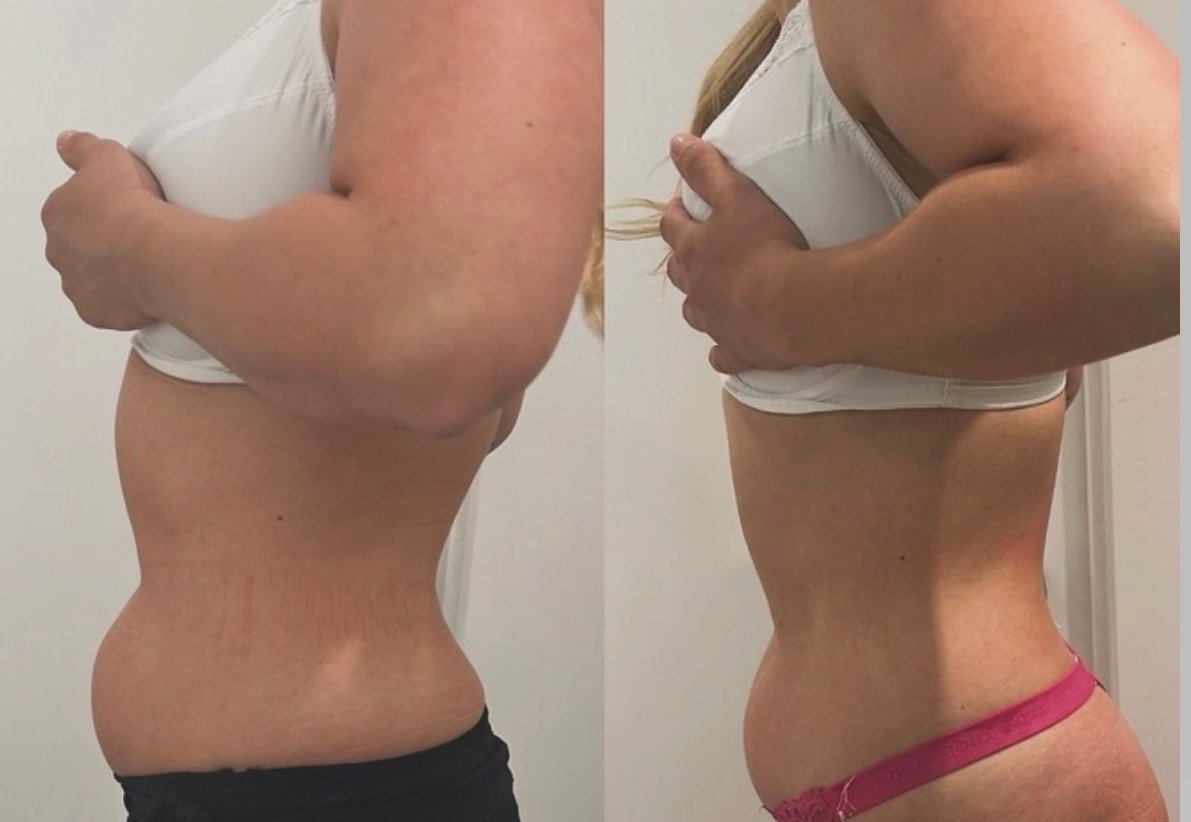
Expect gradual, cumulative softening. Scars typically become flatter, less shiny and closer in tone to the surrounding skin, and stretch marks become noticeably less textured. Most clients see meaningful change after two sessions and their best result three months after the final one.
Improvements are permanent because they come from remodelled tissue rather than concealment. Some clients choose an occasional additional session years later if they want to push a stubborn area further.
Aftercare advice
- Keep the area clean and dry for 48 hours
- Apply only the recommended healing balm or serum
- No swimming, sauna, steam or hot tubs for two weeks
- Avoid exercise that stretches or sweats over the area for 72 hours
- Do not pick or scratch flaking skin
- Use SPF 50 over the area for a minimum of three months
- Massage the area gently once fully healed to support remodelling
- Allow six to eight weeks between sessions — patience is part of the treatment